
Healthcare CIOs today don’t just manage systems they manage continuous, high-velocity data generated across EHRs, medical devices, imaging systems, cloud platforms and edge environments.
As care delivery becomes more real time and AI-driven, the combination of edge-to-cloud data fabrics and real time ETL pipelines is fundamentally transforming how healthcare IT leaders architect modern digital ecosystems.
What Is an Edge-to-Cloud Data Fabric in Healthcare?
An edge-to-cloud data fabric is a unified data architecture that connects and governs data across on-prem systems, cloud platforms and edge devices, replacing fragmented silos with a single, trusted, real-time data layer. This fabric integrates EHR systems, imaging platforms, billing and claims data, lab systems and IoT medical devices while feeding analytics and AI platforms in the cloud.
It aligns closely with the rise of modern Health Data Management Platforms (HDMPs), which provide the foundation for real-time data availability, AI scalability and standardized governance. For healthcare IT leaders, the promise is a seamless and governed flow of clinical, operational and administrative data across all environments.
Why Real-Time ETL Is Essential for Healthcare Modernization
Traditional ETL processes were designed for overnight batch jobs, but healthcare environments operate in real time, where ICU monitoring, emergency department flow and remote patient monitoring demand continuous insight.
Real-time ETL replaces slow batch workflows with continuous ingestion, transformation and loading of data across clinical and operational systems. This enables instant analytics, real-time alerting, high-quality AI inputs and more accurate operational decision making.
When combined with the data fabric, real-time ETL becomes the mechanism that keeps the entire health system’s data fresh, synchronized and ready for action.
Real-Time Operational Intelligence Instead of Historic Reporting
Healthcare organizations are moving from retrospective decision-making to real-time operational intelligence.
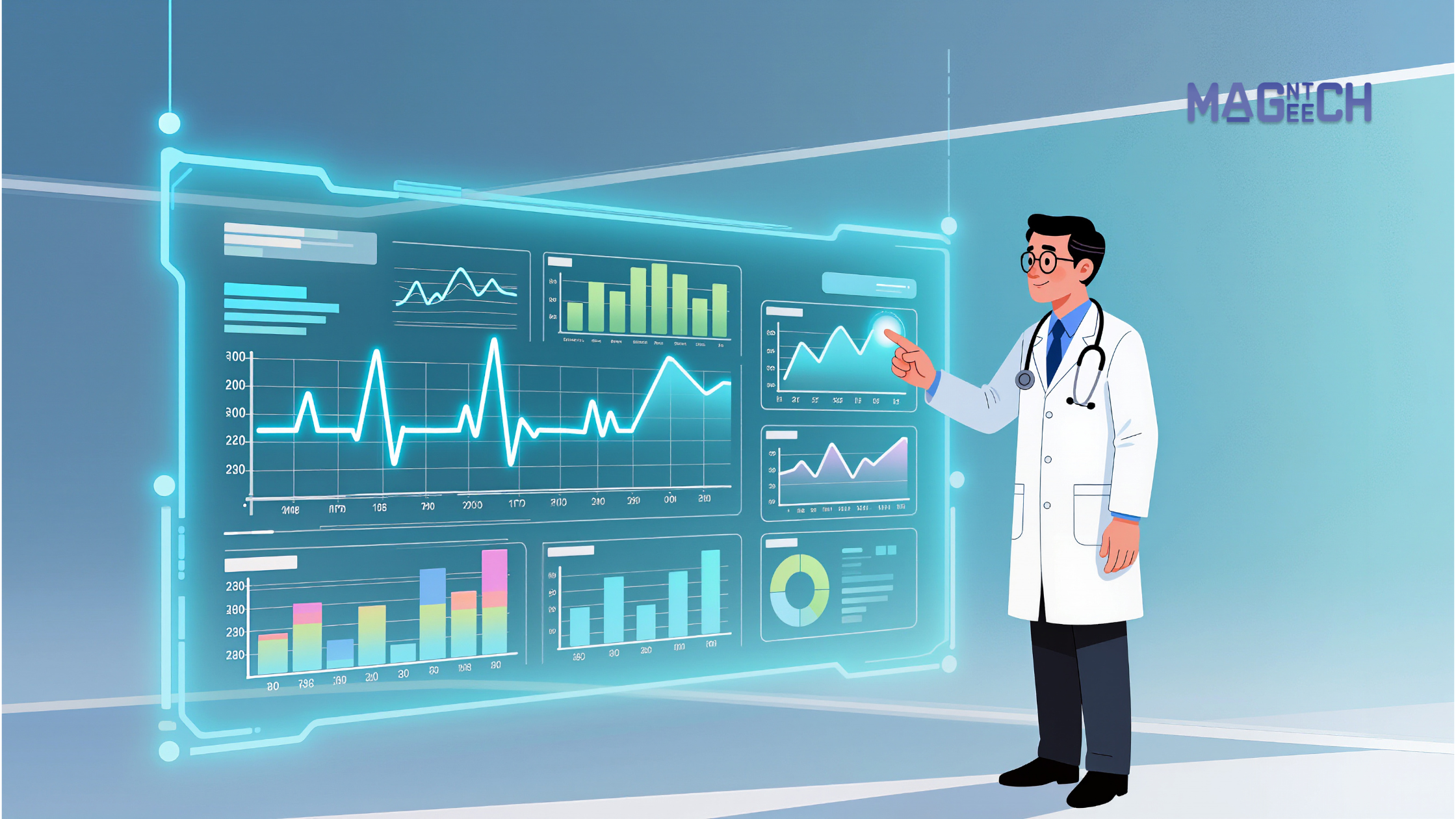
With a unified data fabric and continuous data streams flowing through real-time ETL pipelines, hospitals can access live dashboards that display patient flow, ED wait times, bed availability and care-path bottlenecks as they happen.
Leadership no longer relies on outdated reports but gains immediate visibility that supports proactive coordination, faster interventions and improved patient throughput. This shift fundamentally changes how clinical operations and hospital command centers operate.
Powering AI, Predictive Analytics, and “Intelligent Health”
AI driven care models depend on high quality, continuous and comprehensive data.
A healthcare data fabric integrates structured information such as labs and vitals with unstructured content like clinical notes and imaging, creating a unified foundation for advanced analytics.
Real time ETL ensures that predictive models receive up to date inputs, enabling use cases such as early-warning clinical alerts, readmission-risk forecasting and operational prediction for staffing and bed management.
With this architecture, healthcare systems become truly AI-ready, allowing them to deploy models quickly, validate them continuously and scale them across departments.
Stronger Data Governance, Compliance and Security Across Environments
Healthcare data governance becomes more reliable when a data fabric centralizes controls over lineage, access, policies and metadata.
Instead of managing compliance across disconnected systems, IT teams enforce standards consistently from edge to cloud. Real time ETL enhances this governance by applying encryption, masking and schema validation during the data flow itself, ensuring compliance with HIPAA, GDPR and clinical standards such as FHIR and HL7.
This approach significantly reduces complexity while strengthening the organization’s security posture.
Faster Innovation and Easier Integration Across Digital Health Ecosystems
Healthcare IT leaders face constant demands to integrate new digital health apps, remote monitoring solutions, AI platforms and external partner systems.
A data fabric creates a standardized integration layer that simplifies onboarding of new technologies, while real-time ETL enables event-driven data sharing across the ecosystem. As this landscape becomes more complex, innovation marketplaces also play a meaningful role.
Platforms such as Magnetech help hospitals identify trusted technology providers, evaluate solutions that already align with interoperability standards and connect with experts who understand real-time data requirements. This reduces integration friction, accelerates pilot evaluations and supports IT teams in selecting tools that fit their edge-to-cloud architecture.
With both the right technical foundation and the right innovation ecosystem, health systems can evolve faster and innovate with lower risk.
What Healthcare IT Leaders Should Do Next
Healthcare leaders aiming to embrace this architecture should begin by identifying a few high impact real-time use cases that demonstrate value quickly, such as emergency department load monitoring or real time revenue cycle visibility.
They should then evaluate whether their existing data platforms, ETL systems, HDMP capabilities and cloud infrastructure can support a real-time, governed, edge-to-cloud architecture.
Building a collaborative team across clinical operations, IT, data engineering, cybersecurity and governance will ensure alignment and accelerate implementation.
Final Thought
Edge-to-cloud data fabrics and real time ETL are not merely technical upgrades they represent a strategic evolution toward more intelligent, data-driven and AI ready healthcare systems. Leaders who adopt these architectures now will be positioned to improve operational performance, enhance clinical outcomes and accelerate innovation across their organizations.
Leave a Reply